A small church with a big heart, right in the heart of London.

Grade II* listed church at the heart of Holborn for over 300 years, now embarking on a significant restoration project to secure its future.
Watch Our Short Film


Our History
The whole of England is divided into parishes, making a map of the country look rather like a patchwork quilt of spiritual care by the Church of England.One such “patch” is the parish of Saint George the Martyr, Queen Square, established in 1723, situated at the very heart of the bustling global crossroads that is London.
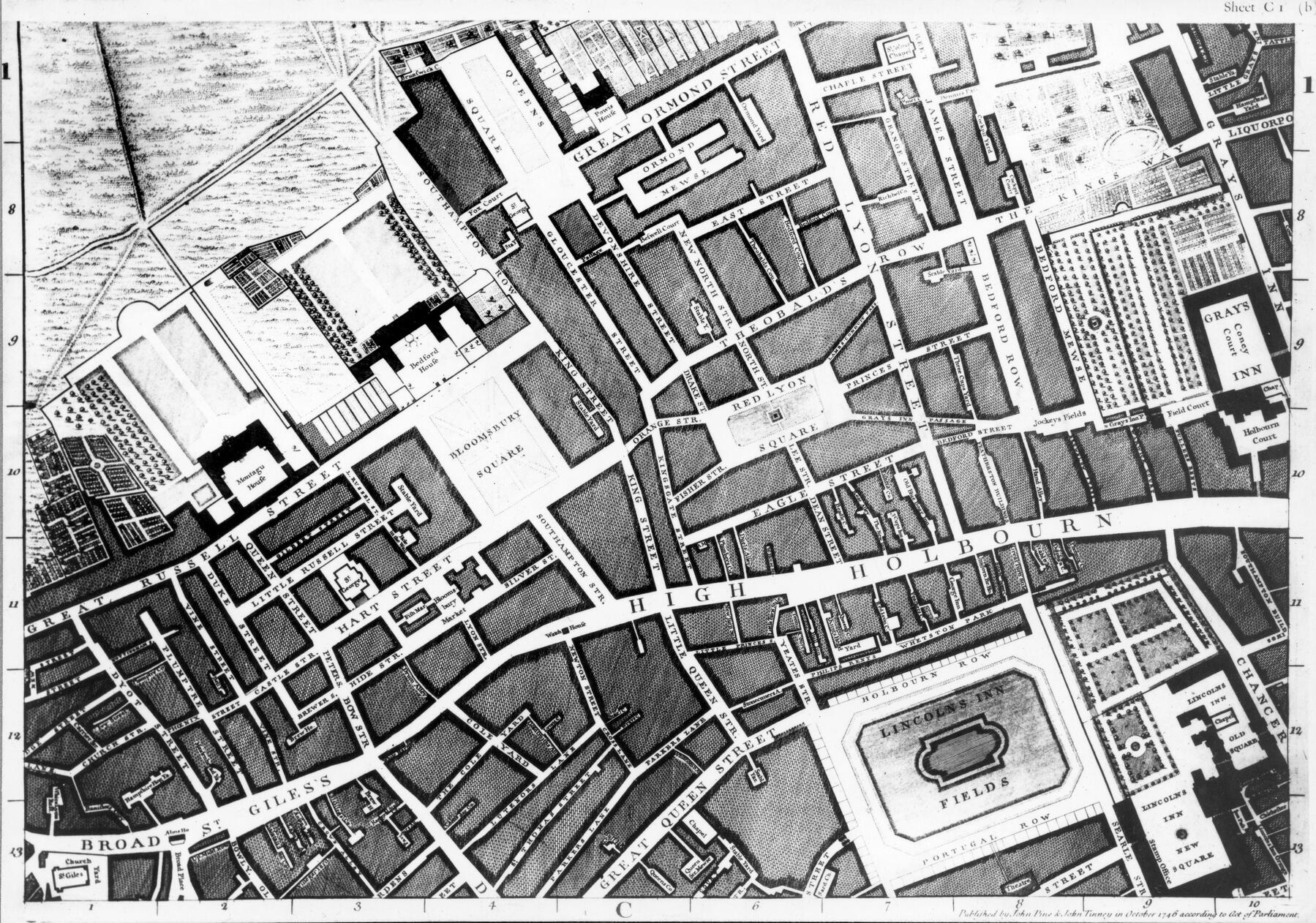
Map of Bloomsbury 1746 with thanks to Queen Square Archive
Before the late seventeenth century, the area now covered by St George the Martyr, Queen Square was still rural.Built in 1706, St George’s began life as a chapel of ease for the inhabitants of the new houses on Queen Square, which lay some way from the old parish church of St Andrew’s, Holborn Circus.As London expanded rapidly, the 1711 Commission for Building Fifty New Churches made the chapel a new parish church in 1723. They upgraded and expanded the building, including a magnificent ceiling by Nicholas Hawksmoor, and gave the church responsibilities for education and poor relief in the area. A site was also acquired for a burial ground, now known as St George’s Gardens.The church has a fascinating history and is associated with a range of figures who have changed the architectural, literary, medical and social landscape of the country. Our research into this history is ongoing, but here are some aspects we know already.We owe special thanks to Maresha Mead, parishioner and volunteer historian, for all her research to date.
Architecture
St George’s has been remodelled several times.Changes were made to the church in 1721 by Nicholas Hawksmoor, an English Baroque architect and apprentice to Sir Christopher Wren, to make the building more suitable for use as a parish church, with responsibilities for births, marriages, care for the poor and funerals.As well as a ceiling employing the classical circle in a square motif, signifying eternity within the four corners of the earth, this renovation added a font, a reredos with the Ten Commandments, pillars and all-round gallery seating to ensure the whole community could see the worship.A Crang and Hancock organ was added in 1776.
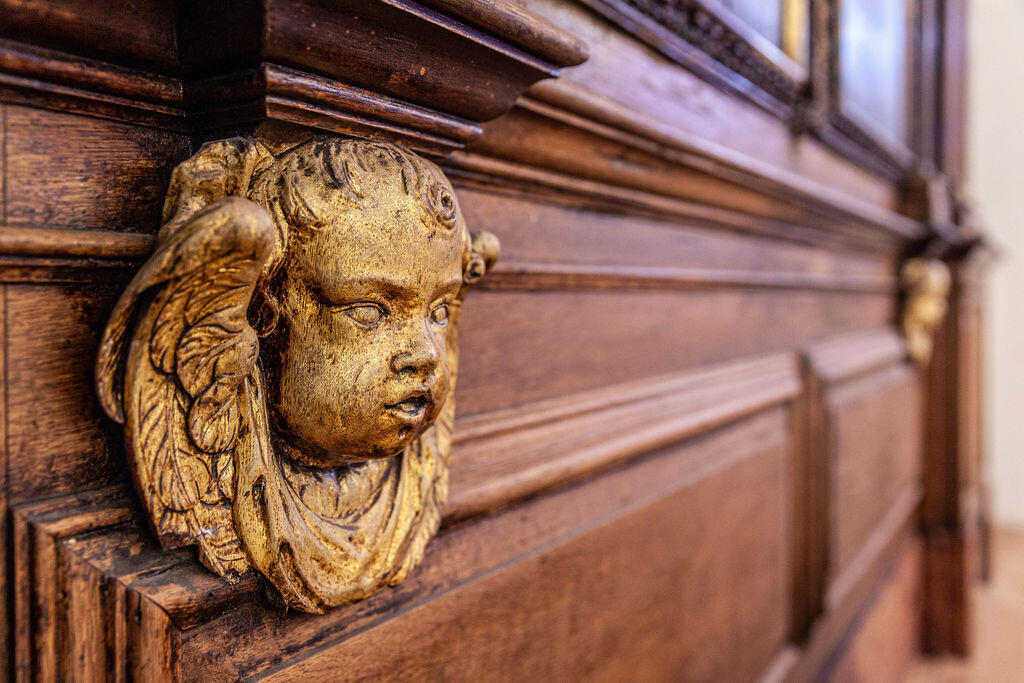
Georgian Reredos
In 1867-68 Reverend John Back employed the English Gothic Revival architect S. S. Teulon to remodel the building. Teulon lived for some time in the parish and his children were baptised in the church.He turned the church to face south instead of east, removing the south and east galleries to create a chancel for a choir and a huge new window, with stone and mosaic reredos depicting Abraham, Moses, Solomon, St Peter, St John and St Paul, along with a new pulpit.He also remodelled the clock and its tower.
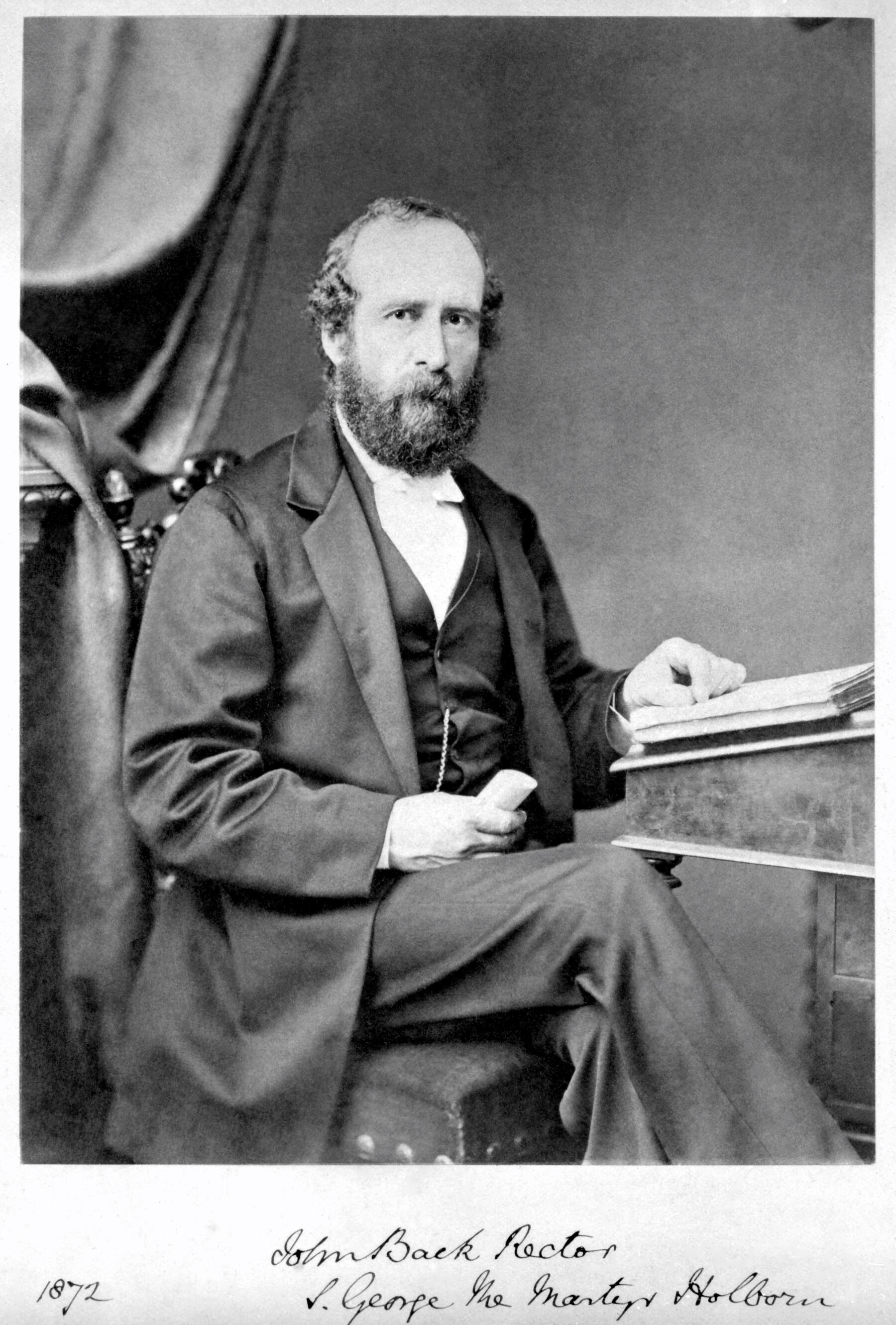
Reverend John Back 1872 with thanks to Queen Square Archive
Done during a period of intense social reform in the parish, Teulon’s ‘muscular Gothic’ style probably aimed to connect a neo-classical building, whose style now connoted impersonality and dehumanising regularity, back to the more person-centred, craft-centred and socially equal world of the early Middle Ages.This, at any rate, was the architectural thesis of John Ruskin, who taught at the Working Men’s College, and of William Morris, who had a house and shop featuring fairly-waged, artisanal homewares at 26 Queen Square.
Medicine
The best-known rector of St George the Martyr was the Reverend William Stukeley, who led the church from 1747 until his death in 1765. He had a wide-ranging and enquiring mind and had been a medical practitioner before taking Holy Orders at the age of 42.Turning his expertise in anatomy towards the unpeeling of the layers of history in archaeological sites, he became fascinated by the stones of Stonehenge and Avebury, believing them to be the remnants of a pre-Christian Druidic religion, an idea that also inspired the poet William Blake. Stukeley’s careful maps of Stonehenge, as detailed in the book he wrote in 1740, Stonehenge: A Temple Restor’d to the British Druids, are still useful to archaeologists today because they record the site before it was disturbed by later digging.Florence Craven Lees pioneered district nursing in London – nursing care provided at home or in convalescent homes. She was friends with Florence Nightingale, served in the Franco-Prussian War and eventually wrote Guide to District Nurses and Home Nursing (1889), which became the central manual for all London nurses. She was awarded numerous medals for her work and became famous before marrying Reverend Dacre Craven, rector of St George, in 1879.The John Back Ward in the Neurology Hospital is named in honour of this former rector who was a generous supporter of the hospital.
Literature & Arts
William Cowper (1731-1800), the poet and hymnwriter, worshipped at St George’s in his younger years as he trained for the bar.The multi-talented William Brockedon (1787-1854), artist, travel writer and inventor, was a parishioner for over thirty years and his memorial stone is on the inner north wall of the church. Born into a lower-middle class watchmaking family in Totnes, Brockedon’s talent and energy were spotted by the local rector and he was given an artist’s training at the Royal Academy.Beginning his career as a painter of mythological subjects and society portraits, his quest to find the original route Hannibal had taken across the Alps led him to branch out into illustrated travel books for Alpine adventurers, as war receded and tourism became more possible.Often made uncomfortable by mountain weather, he invested in Mackintosh’s new waterproofing system, and used the rubber technology to invent more airtight seals for chemical flasks.His dissatisfaction with the quality of pencils available for his sketches led him to invent a new kind of artificial compressed lead – graphite, still in use. Unexpectedly, this also led to the development of the first accurate pill-compressing machine that required no extra binders or fillers to interfere with the medicine’s effect, a discovery for which he is remembered in the Science Museum today.He is one of the very few people to have been a member simultaneously of the Royal Academy, the Royal Geographical Society and the Royal Society, and his portraits of mid-Victorian artists, explorers, writers and scientists can still be seen at the National Portrait Gallery.
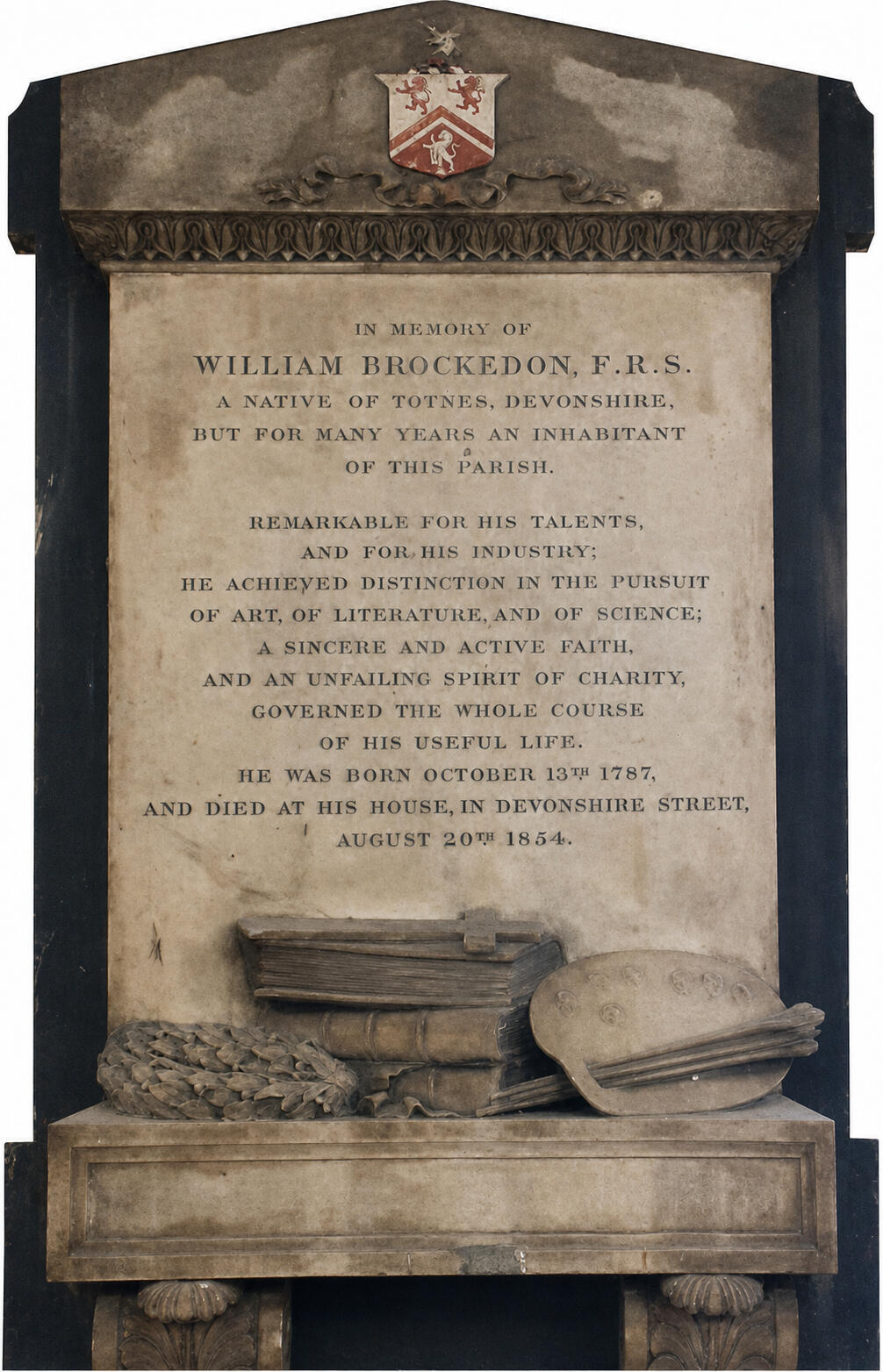
Brockedon’s Memorial Plaque
Social Reform
St George’s is sometimes called “The Sweeps Church”. This name derives from the benefaction of Captain James South, who in 1834 bequeathed £1,000 to the rector and the church wardens to apply the interest to providing “a Christmas dinner for one hundred poor boys” apprenticed to chimney sweeps in the Cities of London and Westminster.Each Christmas, the chimney sweeps’ apprentices came to the church and, after the service, had their dinner.The terms of the will provided that each should receive half a pound of roast or boiled beef, half a loaf of bread, half a pound of potatoes, half a pint of ale or porter, half a pound of plum pudding and a new shilling.
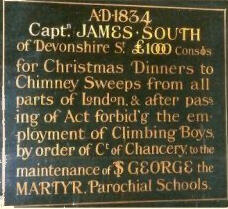
Memorial to Captain James South
In 1854 the Working Men’s College was founded in Great Ormond Street. The Reverend F. D. Maurice was one of the founders of the movement. An early Christian socialist and brilliant scholar, he had been professor of theology at King’s College London until being dismissed for holding heterodox views on the afterlife.He lived at number 24, Queen Square. He is recognised by many as a pioneer of the liberal tradition of Anglicanism.In the Episcopal Church of the United States of America his life is commemorated on 1 April.
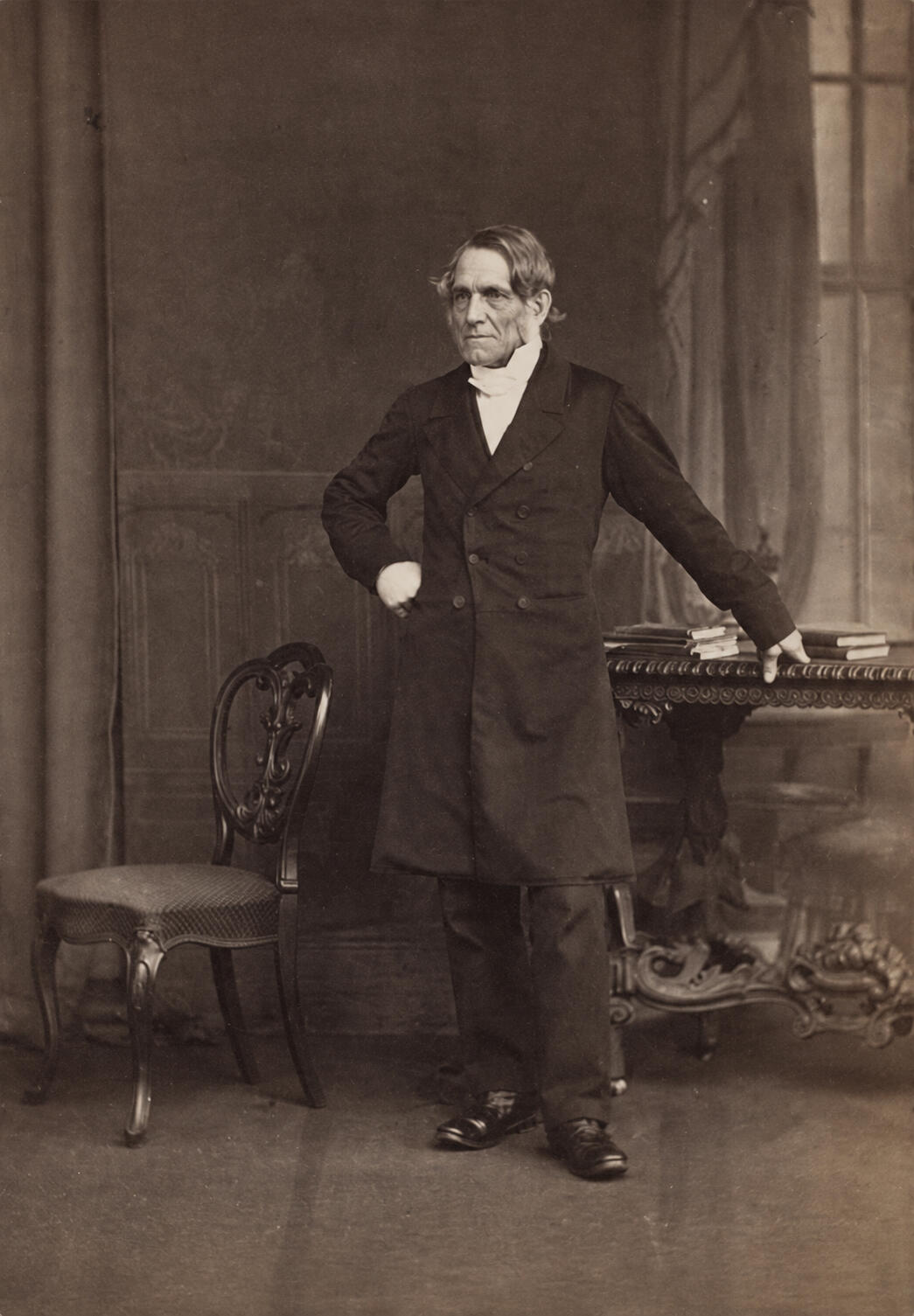
Reverend Prof F. D. Maurice credited to Getty’s Open Content Program
St George the Martyr School
There was a firm intention from the first that the church would involve itself in the education of children. This work started in the church’s vestry around 1709.By 1839 the girls were still in a room over the vestry, but the boys had moved meanwhile to Devonshire Street where there was a schoolhouse. At this time there were 140 pupils in total, compared with 90 in 1735.In 1854 the buildings in Devonshire Street (now Boswell Street) were replaced by the new buildings for girls and infants in Old Gloucester Street. There was a boys’ school in Theobalds Road which continued at that site until the 1870s.In the 1970s the church school moved from its old buildings near the church to take up residence in new buildings in John’s Mews.
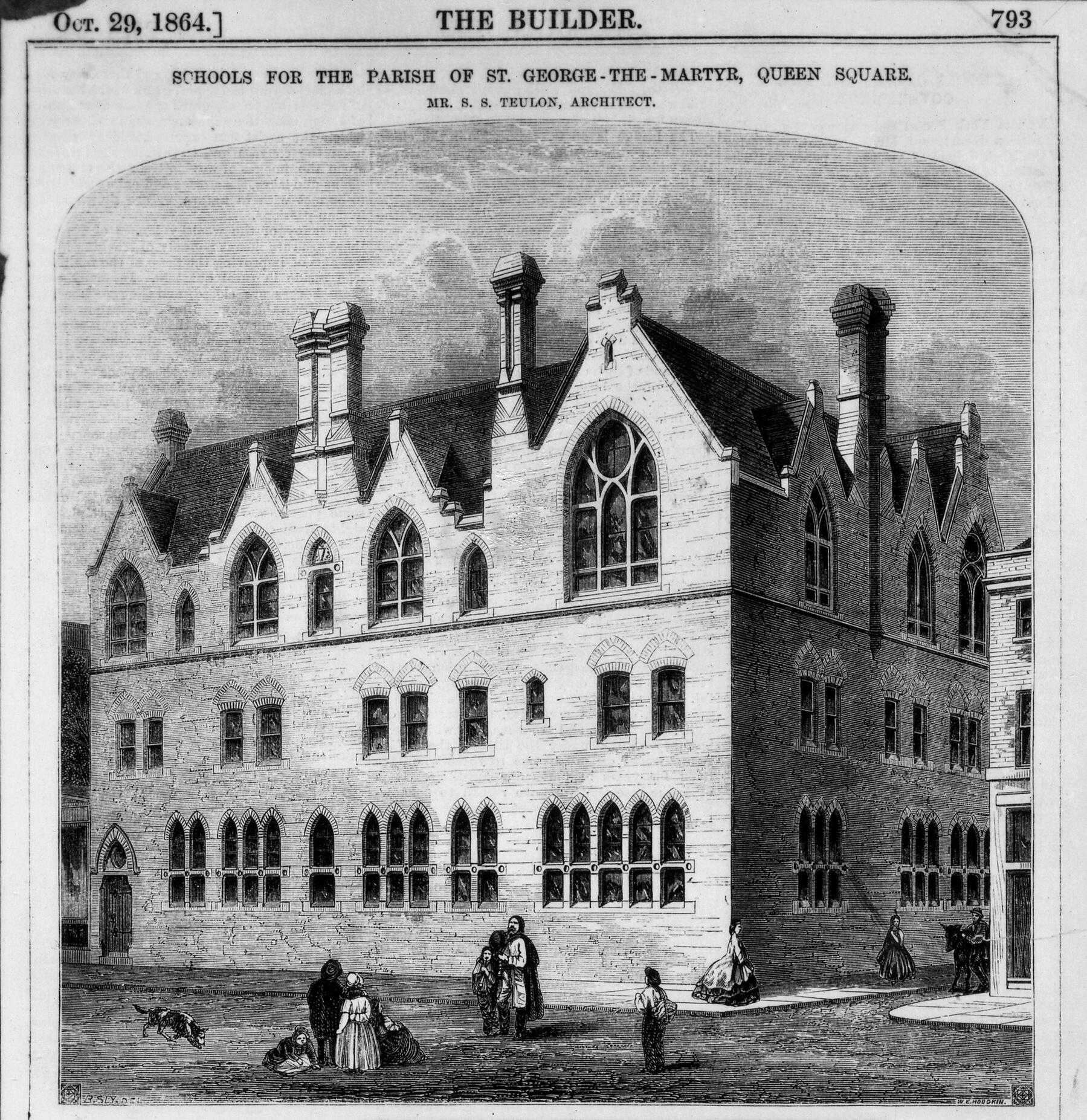
Schools for the Parish of St George the Martyr Queen Square with thanks to the Queen Square Archive


The Project
The Grade II*-listed church of St George the Martyr, Queen Square, has been at the heart of Holborn for more than 300 years.
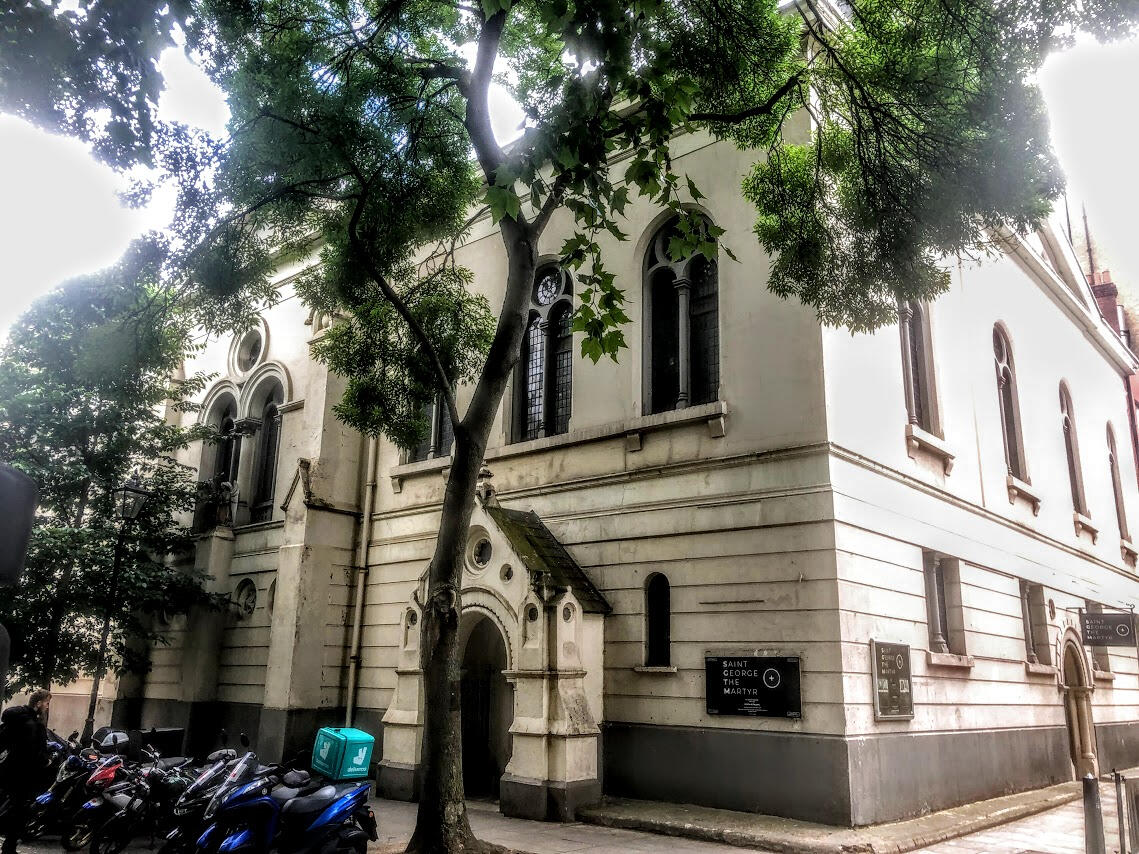
External (©Patrick Comerford 2022)
Built as a chapel of ease for St Andrew’s, Holborn Circus, in 1706, the church has a fascinating history. It is associated with a range of figures who had a significant impact on the country’s literary, medical and social landscape. These include the Reverend William Stukeley, an antiquarian who made some of the earliest maps of Stonehenge and led the church from 1747 to 1765; Florence Lees Craven, a pioneer of district nursing who was appointed the first superintendent general of the Metropolitan and National Nursing Association in 1874 and married the Reverend Dacre Craven in 1879; and William Brockedon, a painter, writer and inventor whose works are displayed in the National Portrait Gallery, the V&A and the Uffizi Gallery in Florence.The proximity of two major specialist hospitals, Great Ormond Street Hospital for Children and the National Hospital for Neurology and Neurosurgery, makes the church an ideal refuge for pastoral support and quiet contemplation for people often facing some of the greatest challenges of their lives.However, over its 300 years of continuous use, wear and tear have taken a toll on this architectural gem; from the restoration of its unique ceiling and columns by the world-renowned architect Sir Nicholas Hawksmoor to window replacement, tower repairs and full redecoration, St George the Martyr requires extensive capital work to safeguard the church and remove it from the Heritage at Risk Register, improve its facilities, and engage more people with its history and heritage.We need to get it back into great shape for the parish and the community here at the heart of London.
In December 2024, we were awarded a £380,000 development grant from the National Lottery Heritage Fund.Using money raised by National Lottery players, The National Lottery Heritage Fund supports projects that connect people and communities with the UK’s heritage. Project 300 Securing the Legacy is made possible with The National Lottery Heritage Fund.
Proposed Works
SGTM is proud to be working with a range of specialist consultants, including Roger Mears Architects, Headland Design, Back Row, Azure Oxford, Leah Harrison Bailey Limited and Oculus Management, as well as a range of local organisations, to carry out this ambitious project.The proposed works are set to make a lasting impact by:- Delivering urgent repair and conservation works to preserve this historically significant church, including its important Hawksmoor ceiling, and to enable the church’s removal from the Heritage at Risk Register.- Transforming underutilised spaces to further develop the church as a welcoming, active and inclusive space.- Delivering sustainability by renewing heating, lighting and AV systems to make the church a flexible space that can be enjoyed in a variety of ways, increasing its impact culturally, commercially and for the community.- Animating the church to further develop it as a resource for local residents and workforce, users of local health institutions and visitors to the area.- Sharing the church’s wonderful history and the untold stories of the fascinating people associated with it.
Repairs & Conservation
The Church Conservation Management Plan describes the interior of SGTM as of exceptional architectural interest.The project will repair and conserve key elements of this interior, addressing deteriorating fabric, outdated services, environmental inefficiencies, limited internal facilities and ancillary space, and pressures arising from the growth of the congregation and local community.
Building Condition
The project will address the serious structural deterioration that has taken place over time and carry out much needed decoration.
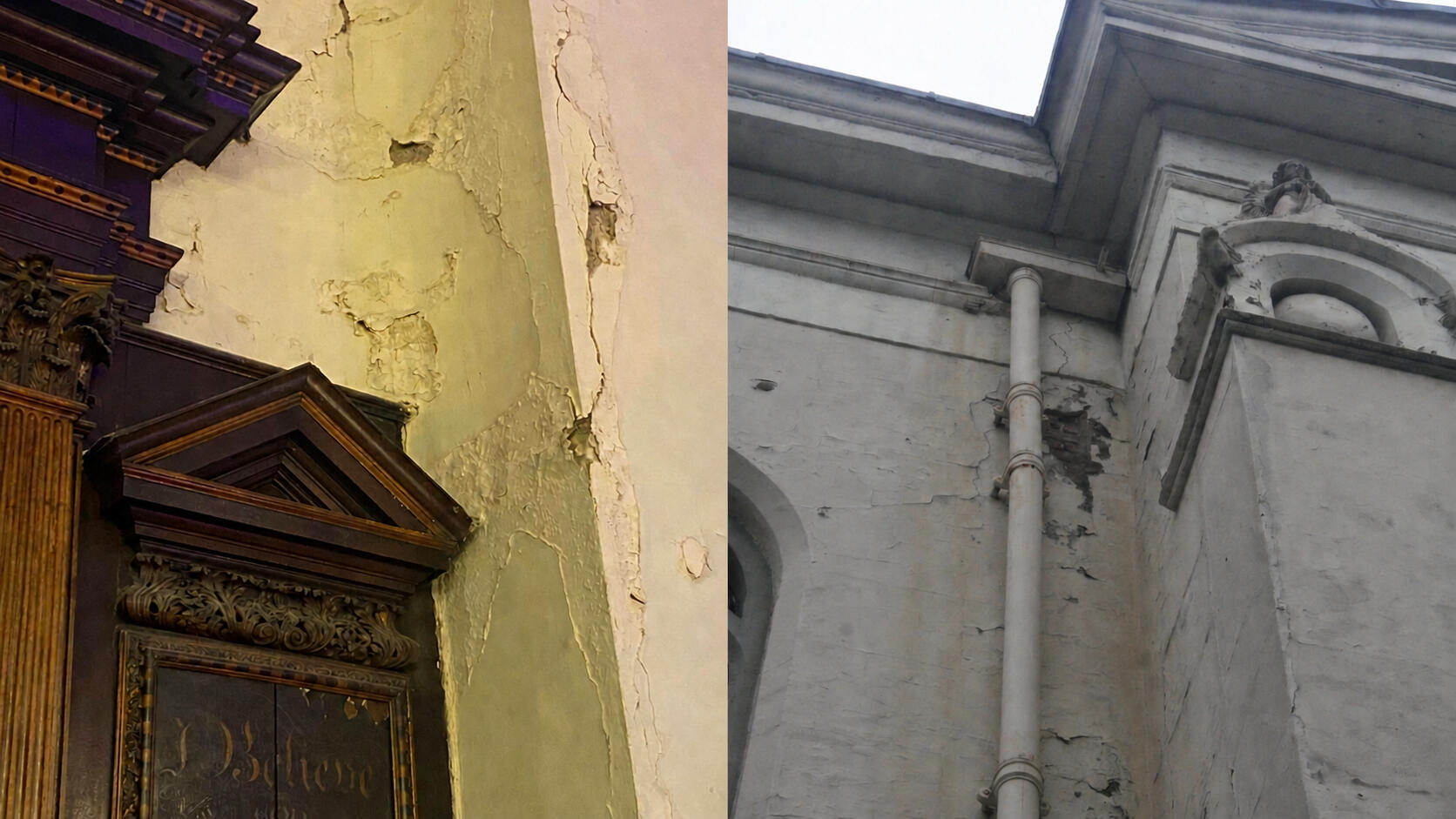
Internal/External Decay
The Ceiling
“Hawksmoor’s interventions… have exceptional significance by virtue of their architectural quality and their rarity, comparable to only four surviving complete church interiors by Hawksmoor…”Alan Baxter Associates (2004)The most significant aspect of the church is the magnificent plaster ceiling, introduced during the 1718 "beautification" under the influence of Nicholas Hawksmoor and the Commission for Fifty New Churches.The church was included in the Historic England Heritage at Risk Register in 2018 following its partial collapse.
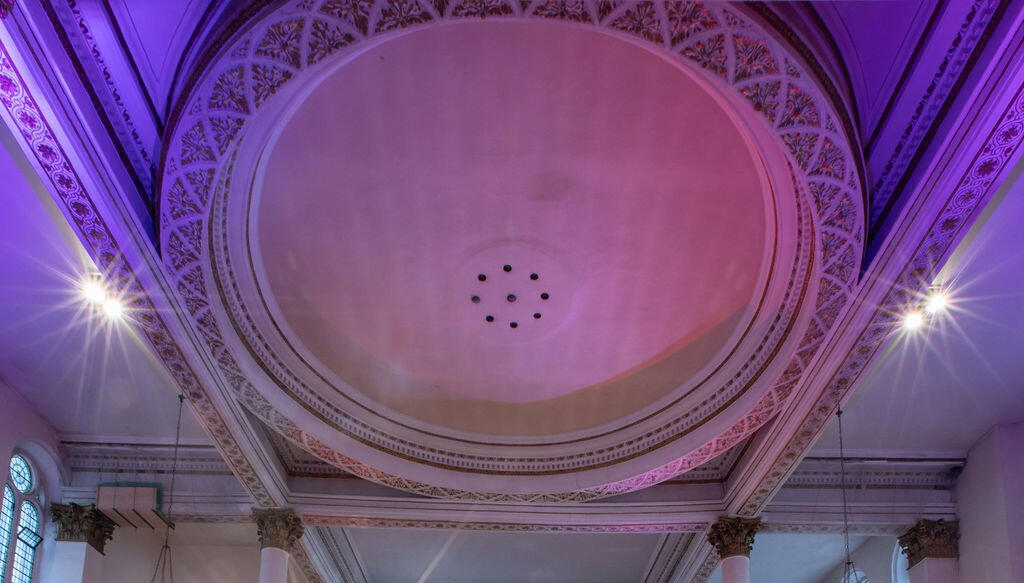
Ceiling
Animating the Church for Everyone
The project is also giving us the chance to further animate the church and develop it as a resource for local residents, students and workers, users of local health institutions, and visitors to the area.SGTM wants to welcome everyone, of any faith or none, who lives, works, studies or passes through the area.

Activity Group
Sharing the Church’s Wonderful History
The church has a fascinating history and is associated with a range of figures who have changed the architectural, literary, medical and social landscape of the country, including medical practitioner and archaeologist William Stukeley, philanthropist Captain James South, pioneering district nurse Florence Craven Lees, poet and hymn-writer William Cowper, the multi-talented William Brockedon, caricaturist for Punch John Leech, and acclaimed poets of the 20th Century Sylvia Plath & Ted Hughes.The project will enable us to engage and excite a wider range of people in the church’s wonderful heritage.
Current Progress & Next Steps
In this development phase of the project, which runs to Spring 2027, we’ll work with architects, surveyors and community consultants to plan the conservation work, design the new facilities, develop our community activities and events programming, and develop a business plan.These designs and plans will form the basis of our £3.5m Delivery Phase Grant Application to the Heritage Fund and if approved, we’ll move to the Delivery Phase in Autumn 2027 with work completing in Winter 2029/30.


Support Us
We have secured most of the £613,889 needed for the development stage, thanks to support from The National Lottery Heritage Fund, the church’s limited reserves and the London Diocesan Fund. We now need to raise the remaining £92,000.Your donation will help us preserve this magnificent church, safeguard its future and share its remarkable history and heritage with larger, more diverse audiences. Every gift, whatever its size, will bring Project 300 one step closer to becoming a reality.
How Can I Give?
To donate by BACS, please email [email protected] for our bank details, stating that your donation is for Project 300.If you are a UK taxpayer, you can increase the value of your donation at no additional cost by allowing us to claim Gift Aid. Please donate through ChurchSuite.